
Understanding The Chocolate Industry: A Deep Dive Into The Value Chain


In this edition of Fincredible, we’ll take a deep dive into the value chain of the chocolate industry. Along the way, we’ll see how a tiny cacao seed transforms into the delicious chocolate bars, truffles, and desserts we love.
We’ll be covering five sections:
Upstream
Midstream
Downstream
Major Players
Market Dynamics
Upstream
Unlike wheat, rice, or corn, which can be grown easily in a wide range of climates, cacao trees (Theobroma cacao) need very specific climatic conditions to thrive. They require consistent heat, high humidity, and abundant rainfall, confining their cultivation to a narrow band around the equator, roughly 10 to 20 degrees north and south. This region is known as the Cocoa Belt. As a result, global production of cocoa is highly concentrated within this belt.
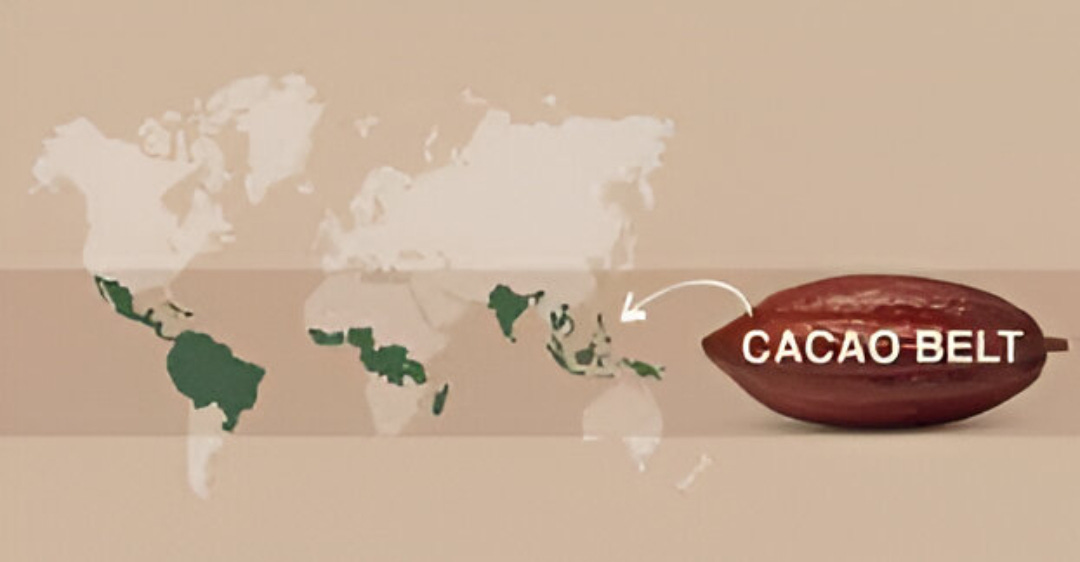
West Africa is the undisputed heartland of cocoa, with Ivory Coast and Ghana alone accounting for over 60% of the world's supply. As the single largest producer, Ivory Coast is responsible for roughly 40% of the global total. The rest of the world, including countries like Brazil, Peru, Dominican Republic, and Colombia, contributes less than 15%.
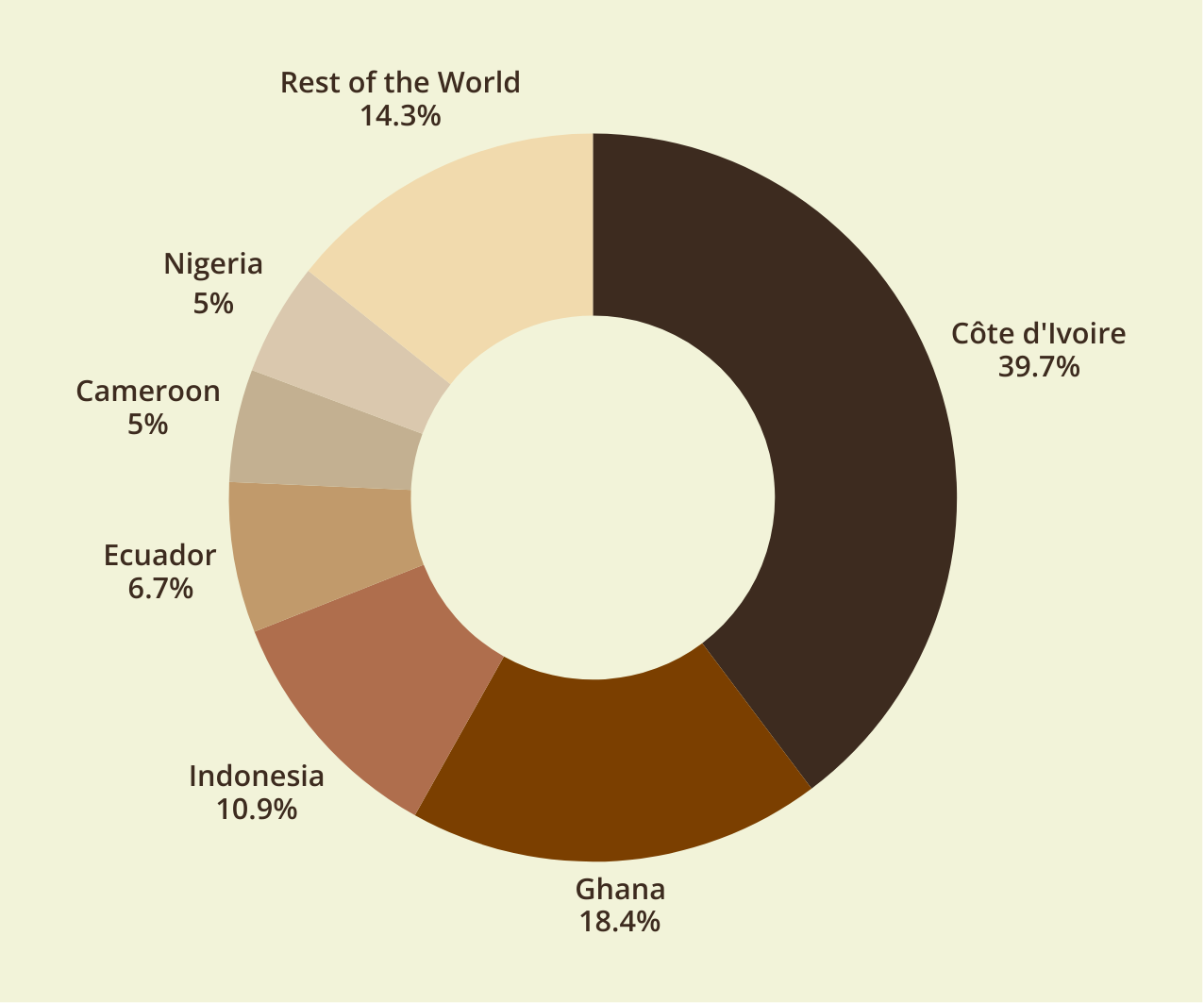
The upstream stage of the value chain is defined by its massive, fragmented base. Globally, the 5-6 million smallholder farmers who grow the world's cocoa have almost no individual market power. In India, cocoa farming is a much smaller but growing industry, concentrated in the southern states of Kerala, Andhra Pradesh, Karnataka, and Tamil Nadu.
Cacao Farming


Cocoa pods, the fruit of the cacao tree, grow directly from the trunk and main branches. Farmers harvest the ripe pods by hand, using sharp machetes for those within reach and long poles with blades for those higher up. This must be done carefully to avoid damaging the "flower cushions" on the tree, which are where future pods will grow. After harvesting, the pods are cracked open, typically with a wooden club, to reveal 30-40 beans covered in a sweet, white pulp called mucilage.


If we cut this cacao bean, and take a look inside it, we’ll see 2 layers: Cacao bean (inside layer) and the cacao pulp (white layer outside).


This white jelly-like pulp is edible. Traditionally, it’s eaten as-is or blended with water into a juice, ‘cacao juice’. It has a fruity flavor with hints of lychee, apricot, peach, elderflower, honey, and citrus, almost like a blend of tropical flavours.
The hard bean inside has a somewhat ‘wet’ look with a purple color and brain-like appearance when you cut into it due to all the individual nibs inside. It’s not recommended to eat this raw, hard bean as it will be very bitter and unpleasant.
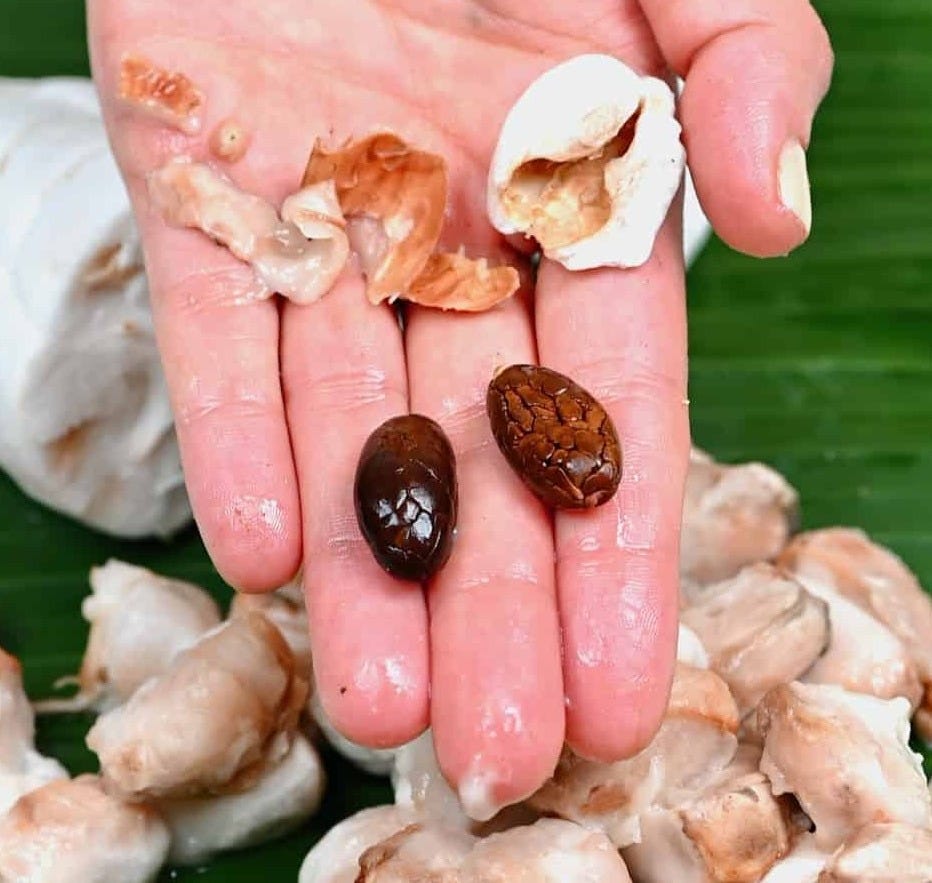
Now, what we want to do is remove the pulp layer from the bean and develop the nutty, chocolate-like flavour profile in it. For this, the cacao beans would have to go through some processes.
Fermentation
After harvesting from the farm, the cacao beans need to arrive at the fermentation area within 4hrs. This time limit is to ensure that the cacao beans retain maximum sugar in their pulp. This sugar is extremely important in the fermentation process. Fermentation is the most important flavor-defining step in the entire chocolate-making process. In this process, cacao beans go through a biochemical transformation.
There are different types of fermentation styles being used around the world. Some common ones being:
Heap Fermentation


Banana leaves are spread out on the ground. Cacao beans are then piled into heaps on these leaves and then covered with more banana leaves. This traditional method is low-tech and common among smaller farms and fermentors.
Basket Fermentation


This method is somewhat similar to heap fermentation. The only difference is that instead of piling beans on the ground, woven baskets with small holes at the bottom are used. These baskets are lined with banana leaves. Cacao beans are put on them and then covered with banana leaves. This method is ideal for small batches like 15-25kgs.
Box Fermentation


In this method, wooden boxes with openings at the bottom for aeration and drainage of the pulp liquid are used. These boxes vary according to capacity (the quantity of cacao beans it can carry): a small box (50-100kg), a medium box (100-300kg), or an industrial-size box (about 500kg & above). These boxes are then lined up like a staircase. And every second day, the cacao beans are transferred to the boxes below. This method of fermentation is used by large plantations.
The fermentation is a two-stage process that takes five to seven days.
Stage 1: Anaerobic Stage
This happens in the first box. Once all the cacao beans are put in these boxes, they are covered with banana leaves and jute bags to create an anaerobic (oxygen-free) environment by making sure air doesn’t enter the boxes.


Yeasts and bacteria naturally present on the beans feed on the sugars in the pulp and start breaking it down. As they do this, they produce ethanol (alcohol) and carbon dioxide as byproducts. This process turns the pulp into a pale yellowish liquid. This process is called Sweating. This generally happens for the first 2 days.
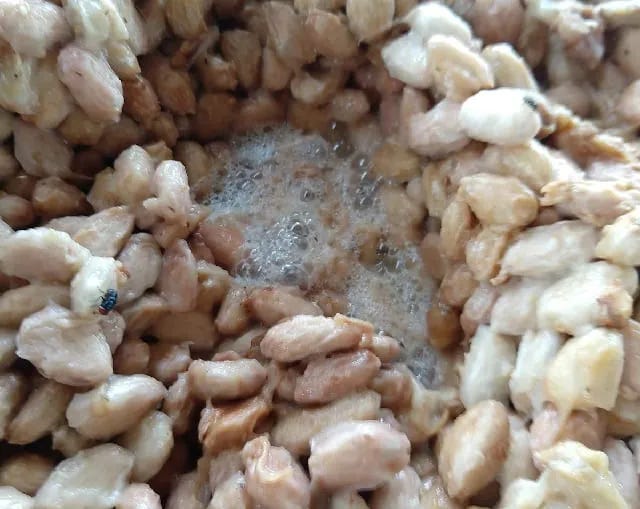
Once all the pulp breaks down and drains away, the beans are transferred to the next box (the box below it in the step-formation) for the aerobic stage.


Stage 2: Aerobic Stage
Beans are frequently turned or mixed to expose them to oxygen. This allows bacteria to thrive, which convert the ethanol into acetic acid — a process similar to making vinegar. This reaction generates significant heat, raising the temperature to 40-50°C, which kills the cocoa bean's germ (so they don’t germinate), changes the bean’s colour to brown, and breaks down its internal cell walls. This breakdown allows complex chemical compounds to mix, removing the bitterness and forming the foundation for essential flavors that will later develop into the rich, familiar "chocolatey" taste during roasting.


The quality of the final chocolate bar is heavily dependent on how well these initial steps are managed. The style of fermentation, size of container, duration of fermentation (4 days, 5 days, or 7 days), frequency of turning & mixing the beans - each of these factors impacts the microbial activity, temperature, acidity, and ultimately the flavour profile of the cocoa beans, ranging from sour to fruity or ‘winey’ flavours.
Poor fermentation cannot be fully corrected by even the most sophisticated manufacturer later in the chain.
Drying
After fermentation, the beans, which have a moisture content of about 60%, must be dried. They are spread out in the sun on mats or concrete patios for about a week until their moisture content drops to around 7.5%. This step halts the fermentation process and makes the beans stable for storage and shipping.


Collection & Transporting
Dried cocoa beans from countless small farms are first collected. This is done by a network of local buyers, agents, and farmer cooperatives who purchase beans directly from the growers. In some countries, government-controlled marketing boards (like the Ghana Cocoa Board and the Ivory Coast Conseil du Cafe-Cacao) regulate prices and sales. All these beans are then packed into jute bags and sold to large, international commodity trading companies.


Midstream
After the beans are dried, they enter the midstream of the value chain. In this stage, a massive consolidation of power and value takes place. The supply chain takes on the shape of an hourglass: millions of farmers at the top sell to a tiny number of powerful companies in the middle, who then sell to the large manufacturers.
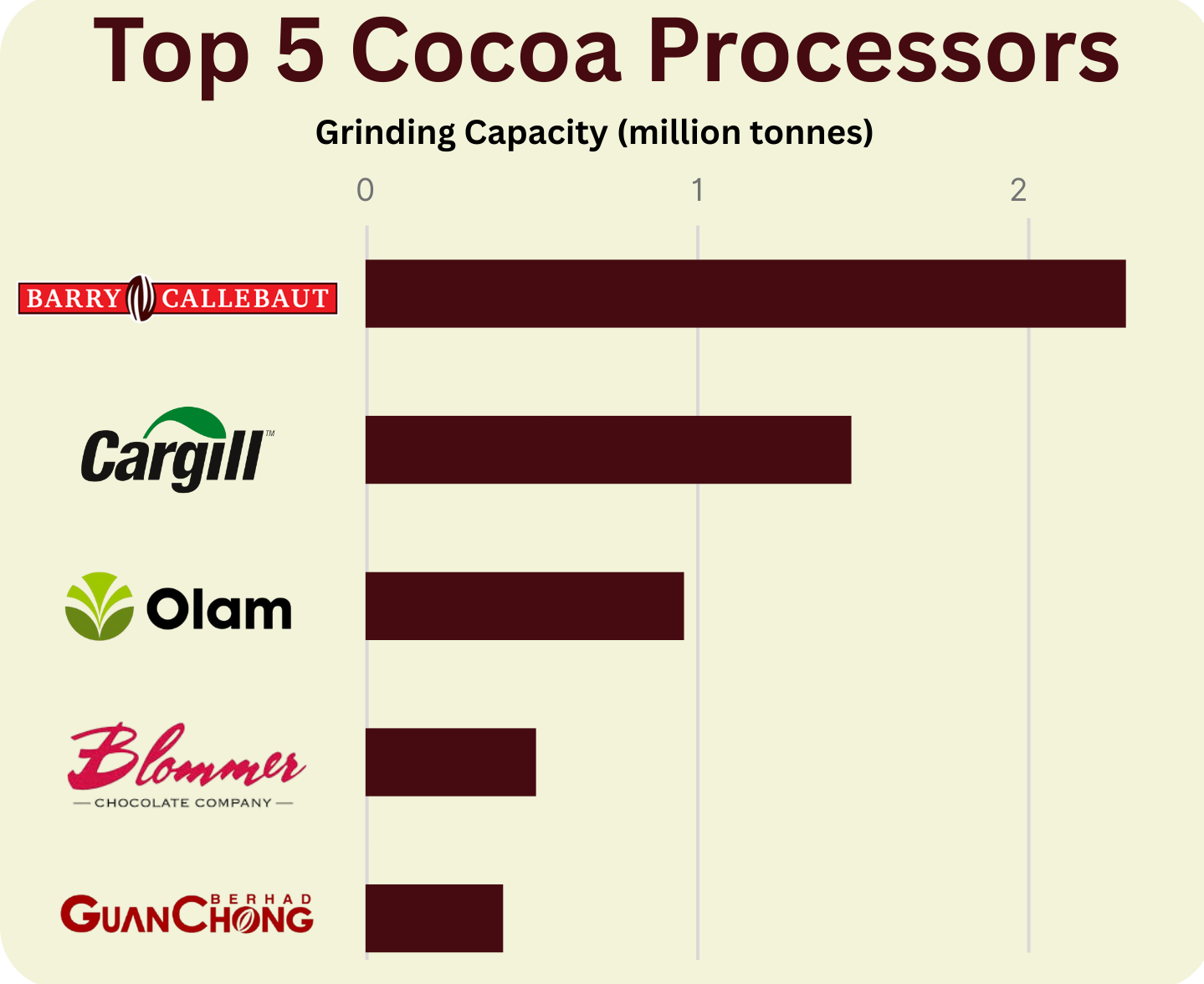
A handful of giant corporations dominate the primary processing stage. These are primarily B2B companies whose names are not on the chocolate bars you buy, but are essential to their creation. The top 3 players are Barry Callebaut (Switzerland), Cargill (USA), and Olam International (Singapore).
These companies operate on a global scale, sourcing beans from all major producing regions, and solve the quality control problem for the manufacturers by blending beans from different origins to achieve a consistent product profile.
Quality Control
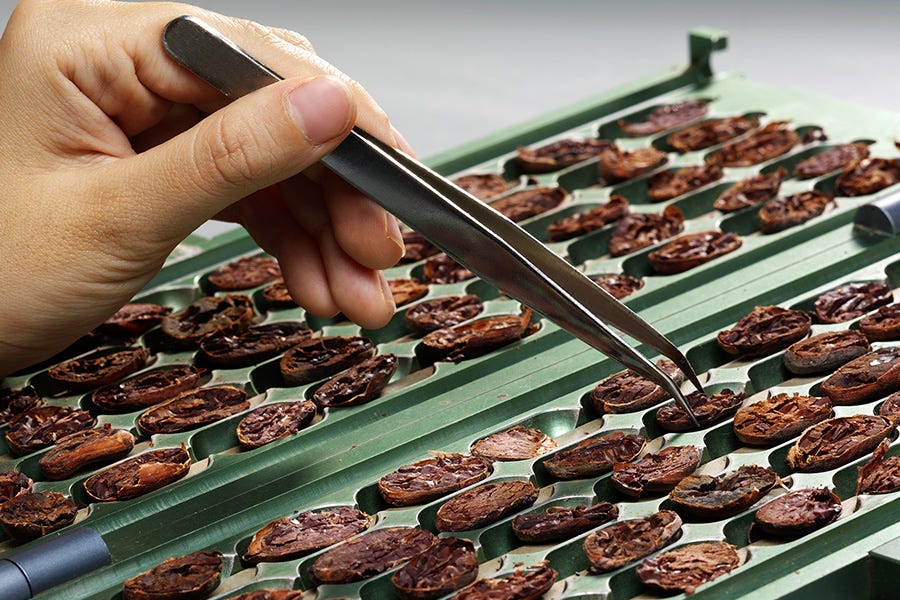
Upon arrival at their facilities or designated warehouses, the beans are inspected for quality, moisture content, defects, and contamination.
Samples are sent for laboratory analysis to evaluate factors such as bean size, fermentation level, mold presence, and flavour potential.
Only the beans that meet strict criteria move forward in the process.
Cleaning & Sorting
Beans are mechanically cleaned to remove debris (twigs, stones, dust) that may have mixed in during drying and collection. These are then further sorted to remove defective or undersized beans. This ensures only the best quality are exported to customers.
Storage & Logistics
These beans are then stored at specialized warehouses with controlled moisture & temperature conditions to prevent spoilage or infestation. Inventory is managed for bulk shipping, traceability, and timely delivery to chocolate manufacturers in Europe, North America, and Asia.


Side Note: These giant trading companies also play a huge role in absorbing the immense price volatility of the raw commodity by using financial instruments like futures contracts.
Processing
Though some chocolate manufacturers prefer buying these beans directly and then process it themselves, most want to buy their processed forms like cocoa liquor, cocoa butter, and cocoa powder.
So traders, notably Barry Callebaut and Cargill, also operate large cocoa processing plants. Let’s take a look at how these beans are processed.
Roasting
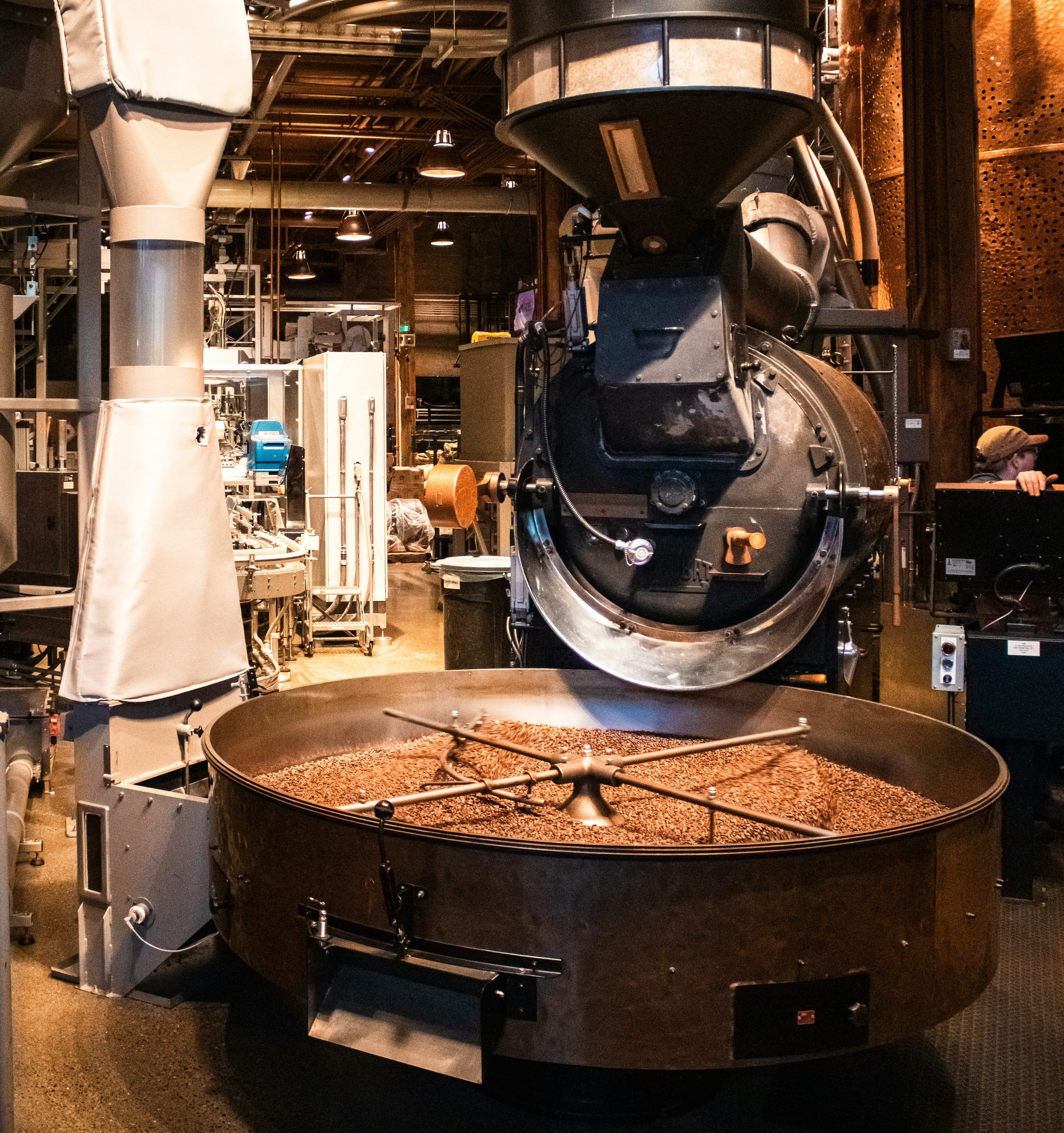
The cleaned beans are roasted at a controlled temperature (usually 110-120°C for 20-40 minutes). Roasting develops the flavour and aroma, and also kills the bacteria. The specific time and temperature depend on the type of beans.
Winnowing
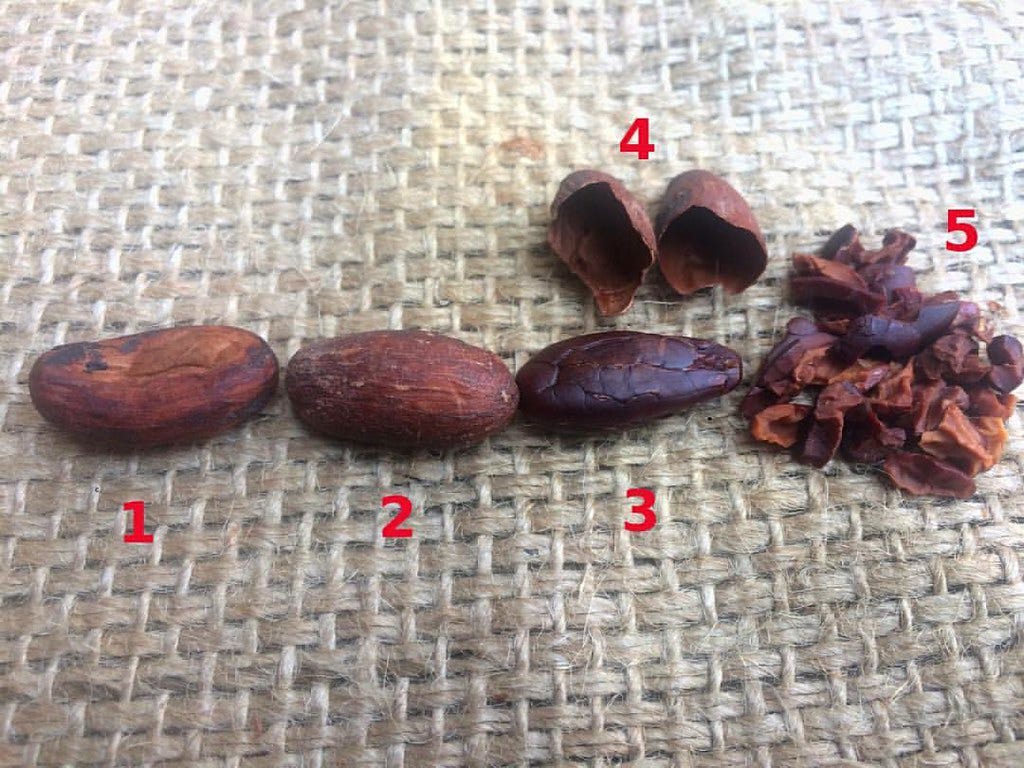
After roasting, the beans are cooled down. Then the outer shells of the beans are cracked and separated to get cocoa nibs (the inner part). These nibs are made of half fats (i.e. cocoa butter) and half cocoa solids (mainly cocoa powder). So if you put a nib in your mouth, and chew on it, your teeth will be making chocolate. As for the outer shells, they are either discarded or used for other purposes like fertiliser, soil conditioner, animal feed, or biofuel.
Grinding


These cocoa nibs are then put into a grinding machine. This grinding process generates heat. This heat melts the fat (cocoa butter) in the nib. This melted cocoa butter then mixes with the cocoa solids in the nib to form a thick, liquid paste called cocoa liquor or cocoa mass.
Pressing
Now, what if we want just the cocoa butter or just the cocoa powder?
We can further process this cocoa liquor using a process called pressing to separate the cocoa butter from the cocoa solids. How this works is, the cocoa liquor is heated to about 45-55 °C to keep it fluid. This hot cocoa liquor is then pumped into a hydraulic press. This machine applies high pressure to the cocoa liquor. This pressure forces out the fatty component (cocoa butter), which flows out as liquid. Once the cocoa butter is extracted, what remains is a solid mass called cocoa press cake.
This press cake is then broken down and ground into cocoa powder of varying fineness depending on the requirements of the final product.


Downstream
Now we have all the fundamental ingredients that a manufacturer might need. These are sold to chocolate manufacturers and food product companies. Apart from these, cocoa-derivatives are also used in cosmetic and pharmaceutical industry.
Chocolate Manufacturing
The world's leading chocolate manufacturers — Mars, Mondelēz International (owner of Cadbury), Nestlé, The Hershey Company, and Ferrero — purchase cocoa liquor, cocoa butter, and cocoa powder (or sometimes whole beans, which they roast themselves) and begin the proprietary processes to make their signature products.
Batching


In this stage, all the ingredients — cocoa liquor, cocoa butter, sugar, milk powder (for milk chocolate), other flavourings — are combined according to a specific recipe.
Refining
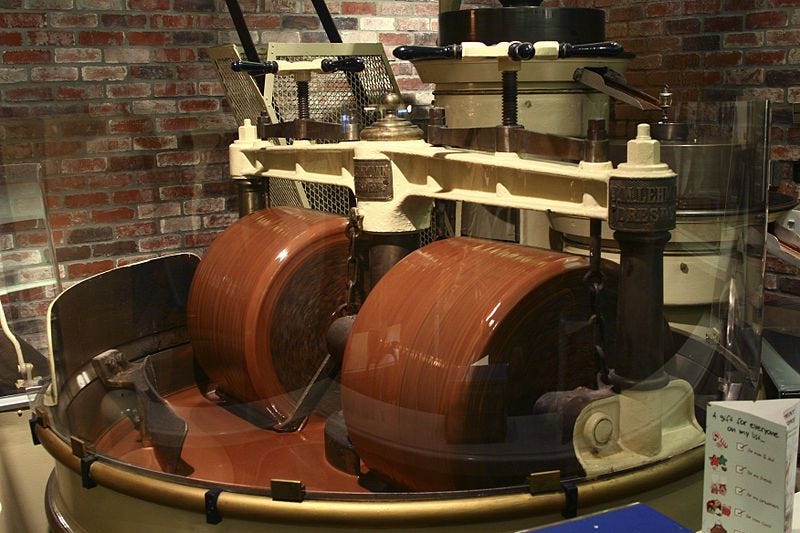
This mixture is further ground to reduce the particles of sugar and cocoa down to a microscopic size, typically smaller than 20 microns. This process can be done by an array of machines, from stone melangeurs to ball mills. The purpose is to create a perfectly smooth and silky texture that is free of any graininess on the tongue. The smaller the particles, the better, i.e., a mixture with 15-micron particles feels way smoother and silkier than one with 30-micron particles.
Conching


The refined chocolate paste is placed in a machine called a "conche," which continuously kneads and agitates the mixture for hours or even days. Conching performs two critical functions. First, due the constant friction the particles acquire a more uniform shape and are therefore more evenly coated with the cocoa butter. This results in an exceptionally smooth, velvety mouthfeel. Second, due to air flowing through the conche and heat created from friction, excess water and any remaining bitter acids are evaporated from the mixture, leading to a more mellow and balanced flavor profile.
Fun Fact: Rodolphe Lindt, a Swiss chocolatier and founder of Lindt chocolate, invented chocolate conching in 1879. It is said that his invention may have been a happy accident when he left a mixer containing chocolate run overnight. When he returned, he noticed that the resulting chocolate was actually shinier, less grainy and had a better aroma than typical chocolate at the time.
Tempering
Now we have beautiful liquid chocolate as per our proprietary recipe. Now if we pour this into molds and let it cool, we’ll have our chocolate ready-to-eat. But you’ll have note some issues — though it tastes delicious, its not very aesthetically pleasing.
First, you’ll notice it has a dull and chalky surface. Then when you hold it, it’ll quickly melt in your fingers. When you try to break a piece off, you won’t hear that satisfying snap. Instead, the chocolate will bend as its too soft. And within few days you’ll see bloom (a whitish or grayish coating) developing on the chocolate (as a result of changes in cocoa butter crystals; though its still safe-to-eat).
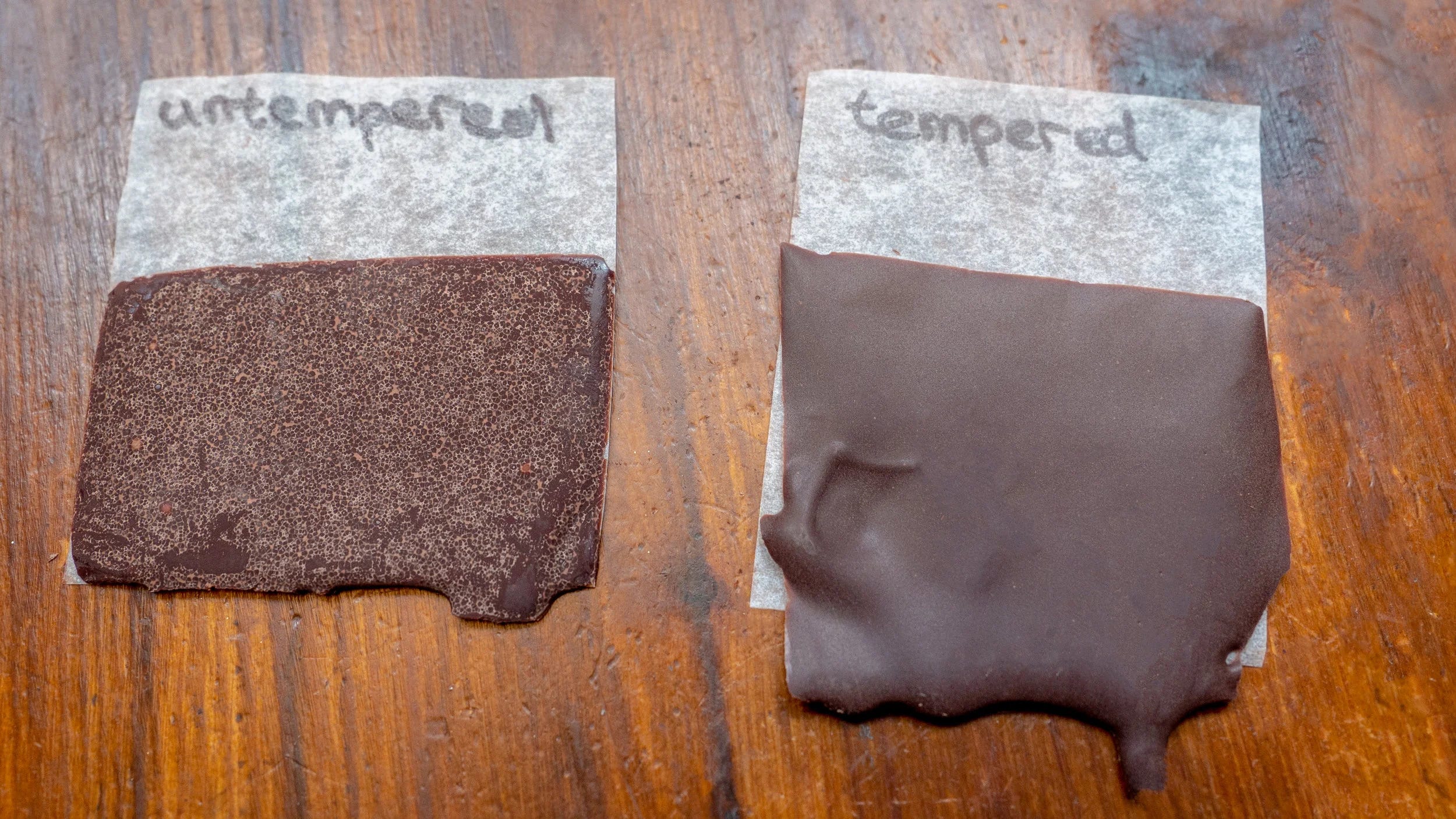
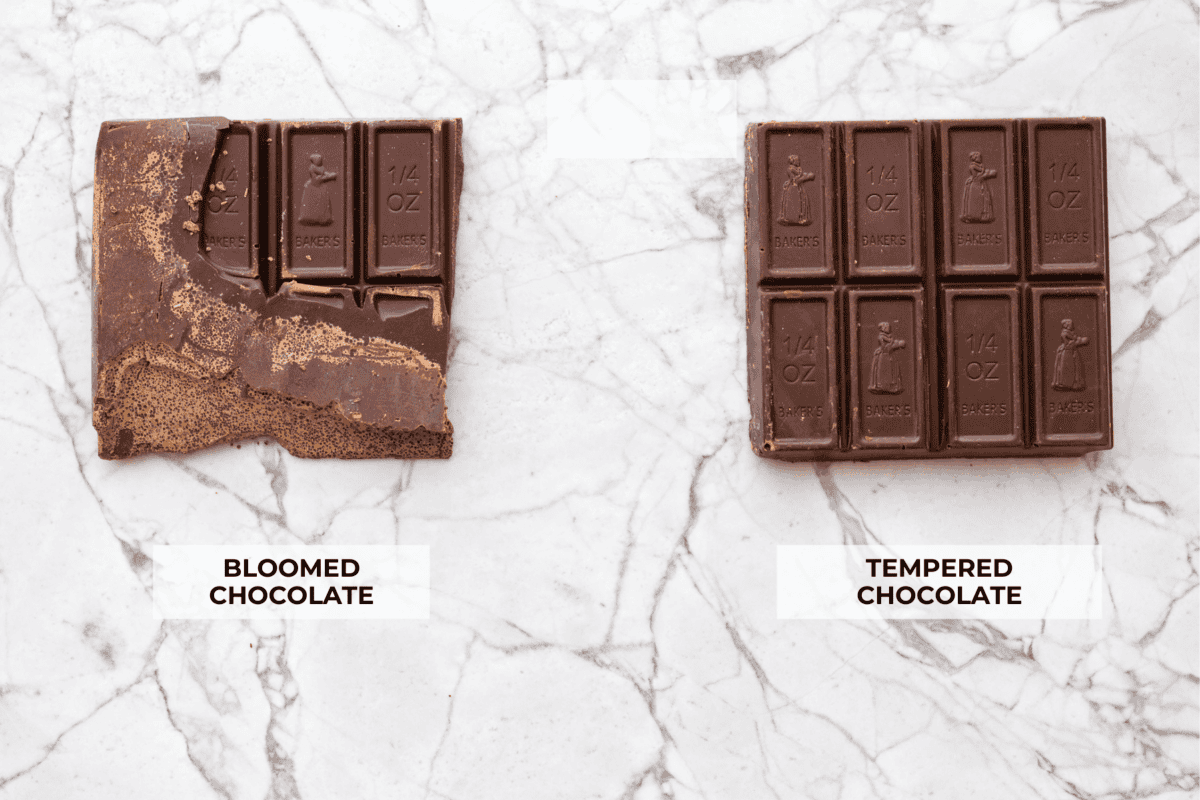
So whats happening here?
All of this is happening because of the wrong crystallization of cocoa butter.
Think of it like carbon, depending on how its atoms are arranged, it can take a soft form like graphite or a hard form like diamond. Similarly, the molecules in cocoa butter can be arranged in 6 different ways. Each of these six arrangements of the cocoa butter molecules forms a different crystal (structure), and each of these crystals has its own unique properties.
These properties are:
Melting point - Some forms melt at a low temperature (making the chocolate melt in your hand), while others have a higher melting point, close to body temperature.
Stability - Some forms melt at a low temperature (making the chocolate melt in your hand), while others have a higher melting point, close to body temperature.
Hardness & Density - The way the molecules are packed determines how dense and hard the solid chocolate is, which will either result in a soft and bendy chocolate or one with a satisfying "snap" when you break it.
Appearance - The surface of the crystal structure dictates how it reflects light, resulting in either a dull, chalky finish with bloom or a beautiful, glossy shine.
The crystal structure we want is Form V crystals.
We achieve this by tempering the chocolate. This is a process where we manipulate the temperature of (by carefully cooling and reheating) chocolate to force the cocoa butter to form as many Form V crystals as possible
This process ensures that the chocolate has a glossy finish and shiny appearance. And when it solidifies, it has a firm texture and a good snap.


Molding and Cooling
This tempered chocolate is poured into molds and cooled to solidify into its final shape, such as bars, blocks, or other confectionery forms.


Packaging
Once solidified and cooled, the chocolate products are packaged for shipping and retail distribution.


Distribution & Sales
The journey to the store shelf typically involves several intermediaries. Distributors often work with specific manufacturers to manage the supply of their brands to a certain region or type of retailer. Wholesalers purchase large quantities of products from multiple manufacturers and sell them in smaller lots to a wide variety of retail outlets. These players are crucial for ensuring that products are available across a vast and diverse retail landscape.


Globally, The primary sales channels for chocolate are large supermarkets and hypermarkets. Retail giants like Walmart (USA), Tesco (UK), and Carrefour (France) are responsible for a significant portion of global chocolate sales due to their vast reach and ability to stock a wide variety of brands.
In India, the retail landscape is diverse and is undergoing a rapid transformation.
Organized Retail: Major domestic players like Reliance Retail and Big Bazaar operate large-format stores that are a key channel for chocolate sales in urban areas.
Traditional Retail: The backbone of Indian retail remains the vast network of millions of local kirana stores. These small, neighborhood shops are critical for the chocolate market, as they drive a huge volume of impulse purchases.
E-commerce and Quick-Commerce: This is the fastest-growing channel in India. Online platforms like Amazon, Flipkart and BigBasket offer convenience and a wide selection. More recently, "quick-commerce" apps such as Blinkit and Zepto have revolutionized the market for impulse buys, promising delivery of chocolate and other groceries in a matter of minutes, directly competing with the convenience of the local kirana store.


Major Players in the Chocolate Industry
The global chocolate manufacturing market is dominated by a few massive corporations. The "Big Five"—Mars (M&M's, Snickers), Mondelēz International (Cadbury, Milka), Nestlé (KitKat, Munch, Milkybar, Bar-One), The Hershey Company, and Ferrero (Ferrero Rocher, Kinder) — command a huge portion of the global market share.
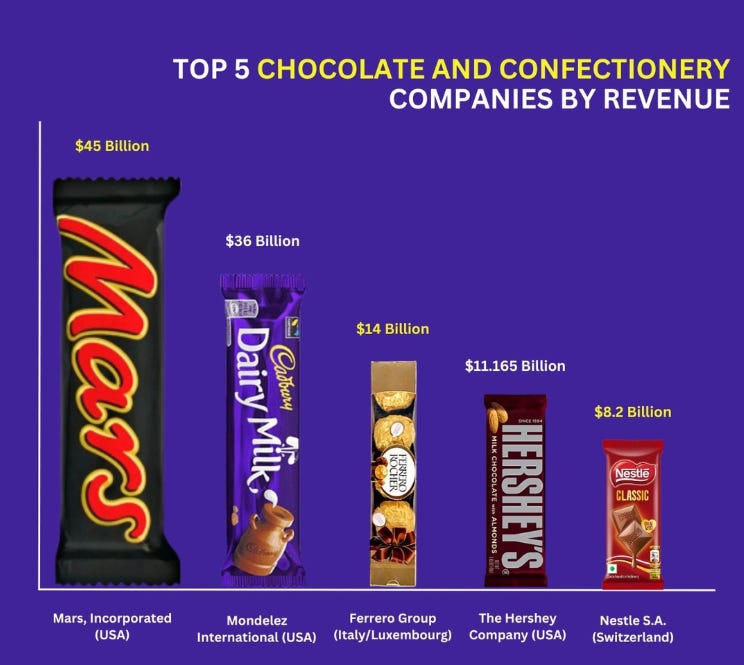
In India, the market includes major domestic players like Amul, a dairy cooperative with a significant chocolate business; and ITC, which operates the luxury Fabelle brand;
Alongside these giants, a new category of producer has emerged: the craft "bean-to-bar" maker. Brands like Soklet and Mason & Co in India represent a movement that rejects the industrial model. They source high-quality, single-origin beans directly from Indian farms and perform every step of the manufacturing process themselves—from roasting to tempering—to highlight the unique flavor profiles of the specific cocoa, much like a craft winery does with grapes.


Market Dynamics
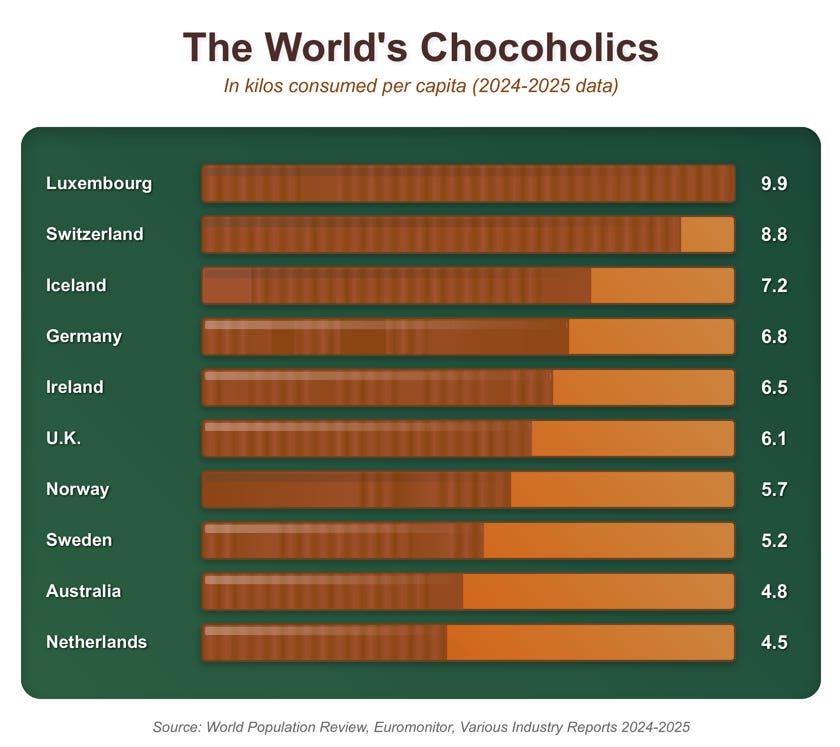
The country that eats the most chocolate is Luxembourg. On average, each person there eats around 10 kg of chocolate a year. That's almost double the world average of 5 kg per year.
People in India eat much less chocolate than the rest of the world—only about 1 kg per person each year. This is mainly because they prefer traditional sweets, especially during festivals.However, this is changing. India's chocolate market is now the fastest-growing in the world because people are earning more money and their preferences are changing.
Demand-side Drivers
While supply is fragile, demand for chocolate is growing and changing, driven by several key trends.
Emerging Markets: The most significant driver of global demand growth is that people in large, developing countries like India and China have more money to spend. And since they eat far less chocolate than people in Europe or North America, there's a huge opportunity for chocolate companies to grow in these places.
Consumer Health Trends: In countries where people already eat a lot of chocolate, many are now choosing dark chocolate over milk chocolate. They believe it's healthier because it has more antioxidants and less sugar. As a result, dark chocolate sales are growing faster than milk chocolate sales.
Seasonal Demand: Chocolate sales always spike during holidays. In the West, this happens around Valentine's Day, Easter, and Christmas. In India, festivals like Diwali and Raksha Bandhan have become major occasions for gifting chocolate, creating very important sales periods.
Ethical Consumerism: A growing number of consumers want to know whether their chocolate was made fairly and without harming the environment. They are aware of problems like child labor and deforestation in cocoa farming. This has created a market for chocolate with special labels, like Fair Trade or Rainforest Alliance, which guarantee better practices. People are often willing to pay more for these products.
In the past, the main goal for big companies was to buy the cheapest cocoa possible to make affordable chocolate bars (mass-market model).
However, today's biggest trends — healthier options, premiumization, and ethical sourcing — all require higher-quality, more expensive, and more responsibly sourced cocoa. This is forcing major chocolate companies to completely change how they do business. Being sustainable is no longer just about looking good; it's become a necessary part of their strategy to succeed.
Supply-side Pressures
Since most of the world's cocoa is grown in one specific region (West Africa), the entire chocolate industry is at risk. A single problem there—like bad weather, a crop disease, or political trouble—can create major issues for the chocolate supply everywhere.
The price of cocoa fluctuates dramatically, and the most common causes are:
Climatic Events: As almost all cocoa comes from West Africa, bad weather there has a huge impact. Climate change is causing hotter days and unpredictable rain, which harms the cocoa trees as a result, they produce less cacao. A specific seasonal threat is the Harmattan, a dry and dusty wind from the Sahara Desert that can damage cocoa pods and leaves, further harming the crop.
Crop Disease & Pests: Cocoa trees are vulnerable to a variety of diseases and pests that can have a devastating economic impact. Diseases like Black Pod Rot and the Cocoa Swollen Shoot Virus (CSSV) can wipe out significant portions of a harvest, leading to major supply shortages.
Geopolitical Instability: Political turmoil, changes in government export policies, or civil unrest in major cocoa-producing countries like the Ivory Coast can disrupt the flow of cocoa beans to the global market, creating uncertainty and price volatility.
Farming Economics: The majority of cocoa farmers live in poverty, earning less than a dollar a day. This low income leaves them with little capital to invest in improving their farms, such as by purchasing fertilizer or new trees, which perpetuates a cycle of low yields. Furthermore, their income is exposed to currency fluctuations; even if the global price of cocoa (traded in U.S. dollars) is stable, a strengthening of their local currency can significantly reduce the amount of money they actually receive.
Financial Markets & Speculation
Finally, it is important to note that cocoa is a globally traded commodity, with futures contracts bought and sold on exchanges in London and New York. This means that its price is also influenced by financial speculation from traders who may never physically touch a cocoa bean. They are just in it to make money from price changes. This layer of financial trading can amplify the price volatility caused by real-world supply and demand shocks.
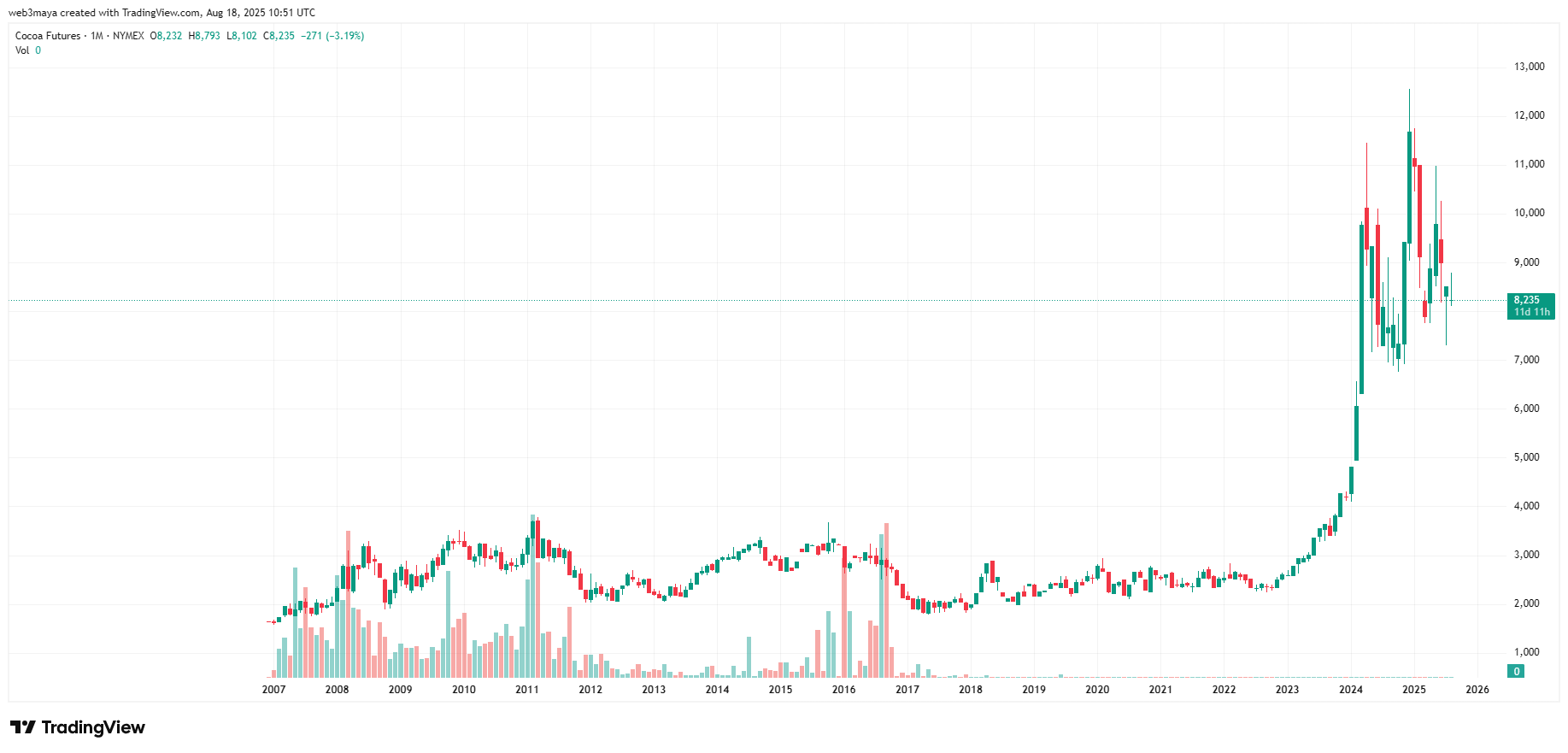
For instance, in April 2024, poor weather conditions in West Africa led to a decrease in cocoa yields. This created concerns about a supply shortage. Speculators, such as hedge funds and other financial institutions, sensing the possibility of higher prices due to the supply issues, heavily invested in cocoa futures contracts.
Initially, the weather-related supply concerns created an upward pressure on cocoa prices, but later, the increased buying from speculators amplified this price surge. As a result, Cocoa prices reached historic highs in April 2024, reaching over $12,000 per metric ton. The price has since fallen and is currently trading around $8,235 per tonne (in Aug 2025).
Enjoyed this edition, show some love by hitting the ❤️ button.
If you have any questions or want to share your thoughts, feel free to reach out in the comments💬 below.
See you next time!
Beautiful ❤️